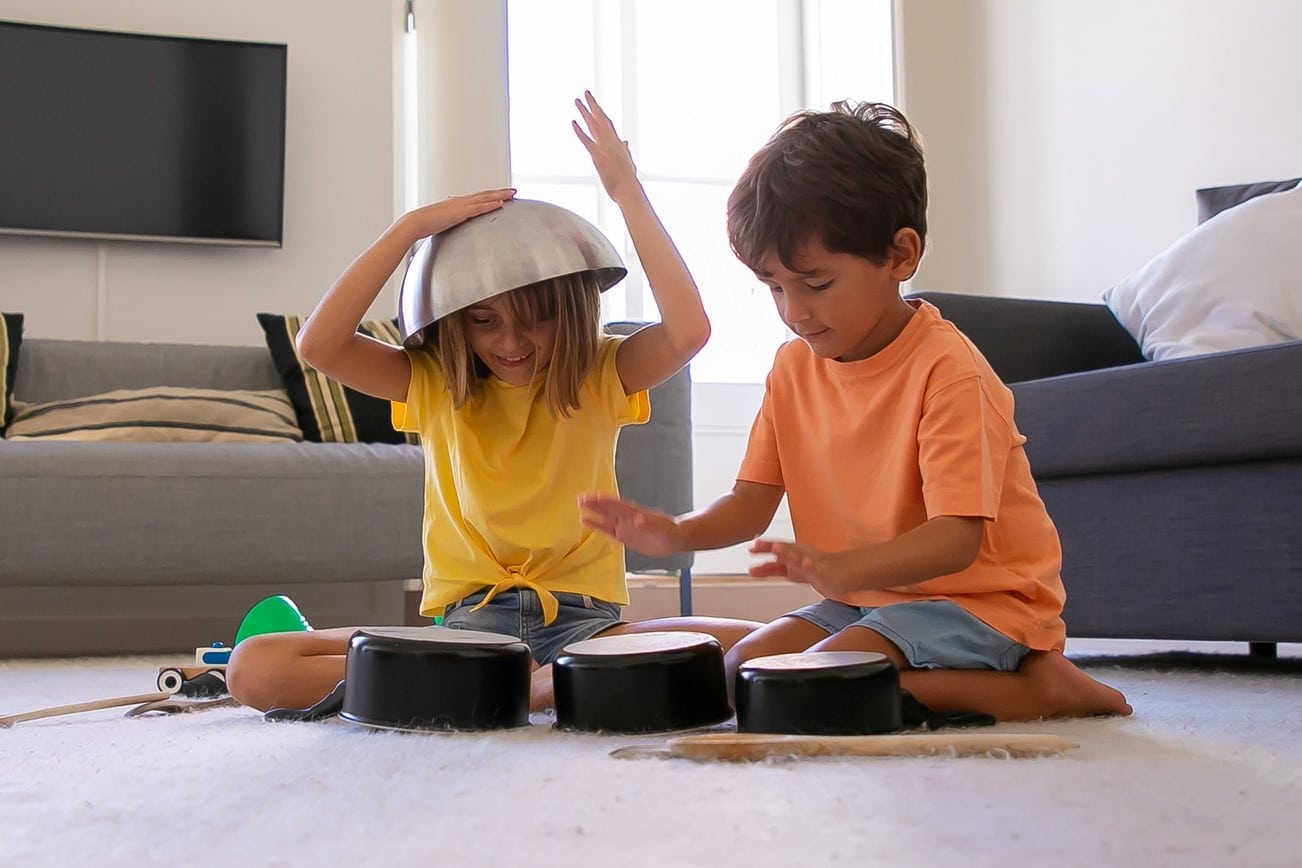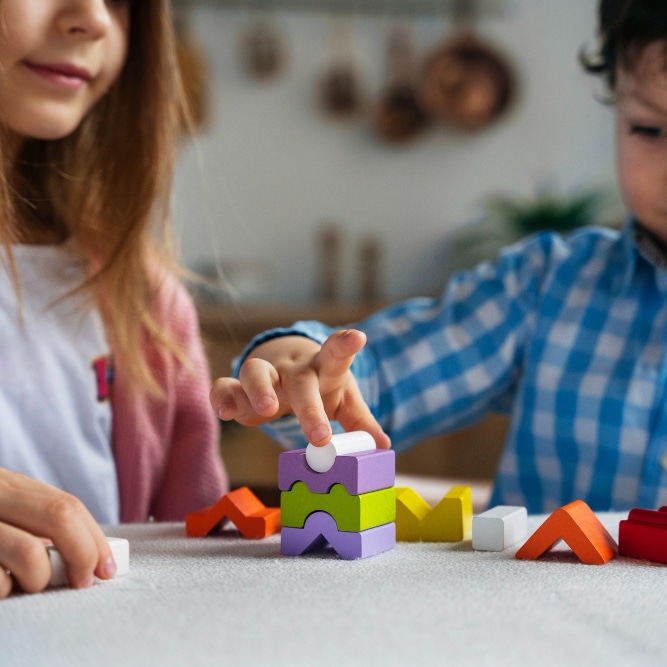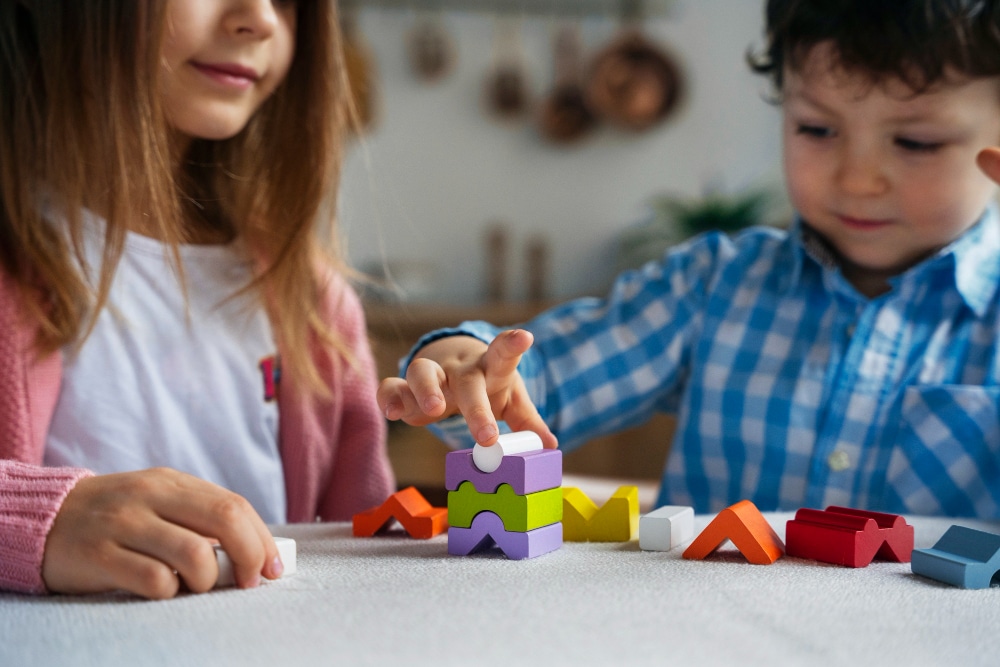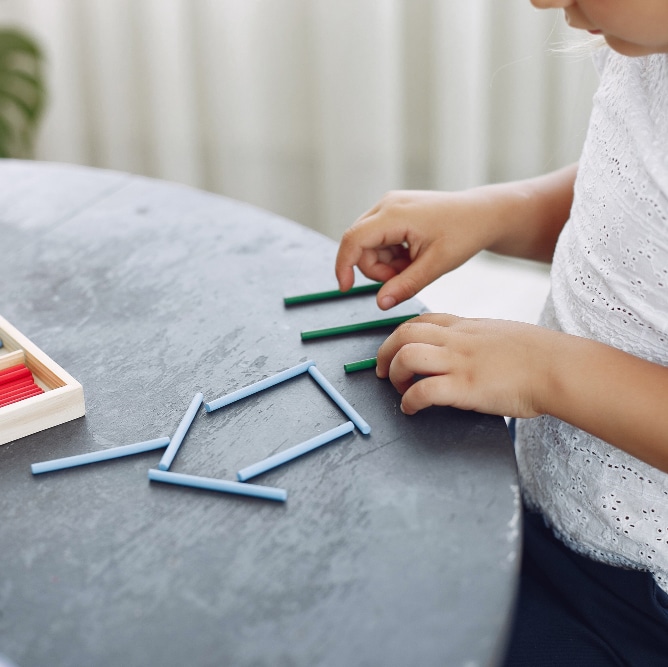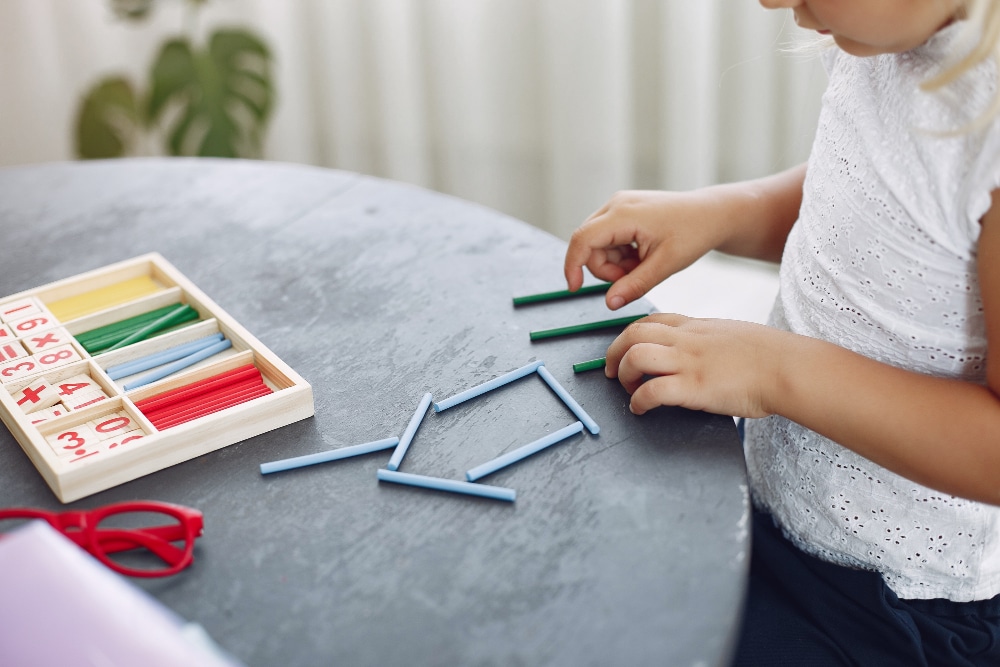

Children engaged in hands-on early childhood education, exploring colorful shapes

Early Childhood Education: Why the Early Years Matter Most

Children engaged in hands-on early childhood education, exploring colorful shapes

Early Childhood Education: Why the Early Years Matter Most

Key Takeaways

AspectSummary
Why This Topic MattersEarly childhood is a critical window for shaping lifelong learning.
Cognitive BenefitsBuilds memory, attention, language, and problem-solving foundations.
Problem-Solving BenefitsEncourages resilience and flexible thinking through hands-on play.
Emotional DevelopmentFosters empathy, confidence, and strong social bonds.
Practical ApplicationsPrepares children for school, friendships, and independent growth.

Why Early Childhood Education Is the Foundation for Lifelong Learning

Imagine a curious 4-year-old building a tower of blocks. She’s playing, experimenting, solving problems, and expressing herself. These everyday moments are the heart of early childhood education.

The early years are when a child’s brain develops most rapidly. In fact, more than 90% of brain growth happens before age five. During this time, children build the foundational skills for how they learn, relate, and explore the world. That’s why these years are important, and they’re transformative.

At ActivityBox, we see firsthand how intentional, play-based learning fosters creativity, confidence, and connection. Whether it’s storytelling, pretend play, or hands-on crafting, each activity becomes a building block in a child’s lifelong journey.

Understanding Developmental Milestones in Early Childhood

Did You Know?

According to milestone guidelines from the CDC, observing how a child plays, learns, speaks, and moves can reveal whether their development is on track.

These milestones include things like using two-word phrases around age 2, drawing simple shapes by 4, or cooperating with peers by 5. Each reflects growing cognitive, physical, and social skills.

When early education aligns with these milestones, children are more likely to thrive. It allows caregivers to provide just the right mix of encouragement and challenge, supporting growth without pressure.
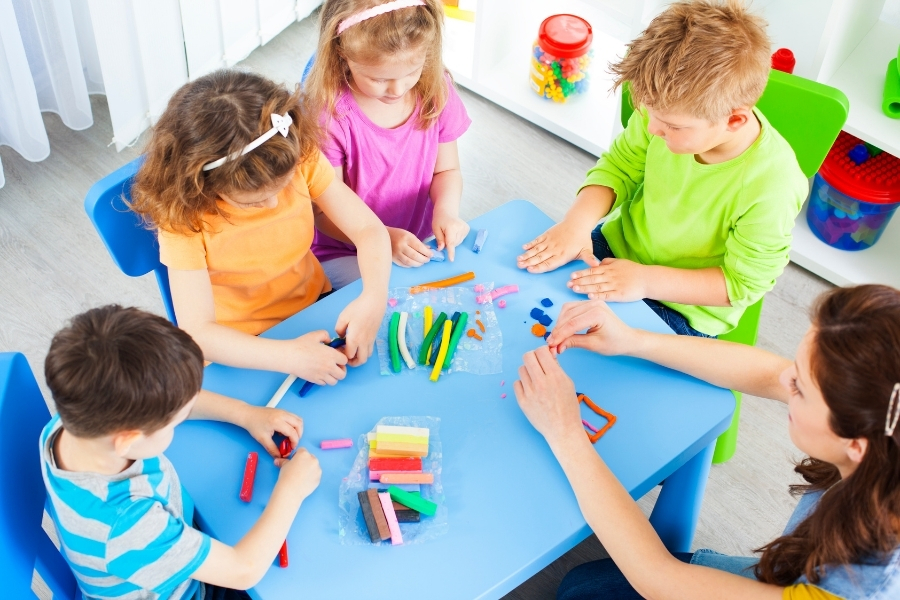
Preschool children engaging in open-ended creative play with colorful playdough during early childhood education activities.

Explore more about developmental milestones in early childhood.

What Are the 4 Stages of Early Childhood Education?

Understanding how children think and learn is essential to creating effective early childhood education. One of the most influential frameworks comes from Swiss psychologist Jean Piaget, who outlined four key stages of cognitive development.

Piaget’s theory of cognitive development explains that children build knowledge actively by exploring, playing, and engaging with their surroundings, not just by listening or watching.

Piaget’s 4 Stages of Development:

  1. Sensorimotor (0–2 years)
    Learning happens through movement, touch, and sensory discovery.
  2. Preoperational (2–7 years)
    Children begin to use symbols and imagination but still struggle with logic and other viewpoints.
  3. Concrete Operational (7–11 years)
    Logical thinking develops, especially with hands-on or real-world activities.
  4. Formal Operational (12+ years)
    Abstract reasoning, planning, and problem-solving become possible.

For ActivityBox families, most children are in the preoperational and early concrete operational stages. That’s why our learning kits focus on tactile exploration, storytelling, and guided problem-solving: the very types of play that align with how children naturally learn at these stages.
screen-free activities for kids

Get the Free Playbook for Early Learning at Home

Discover simple ways to support your child’s growth through creative play, built around real early childhood education principles, not screen time or pressure.

Play-based, age-appropriate activities

Printable planner to guide your week

Fun, no-prep ideas for busy parents

Designed by educators, loved by kids

👉 Perfect for ages 3–8 and aligned with what children are learning in preschool and kindergarten.

Why Fine Motor Skills Matter for School Readiness

Have you ever watched a child proudly button their shirt or carefully cut along a line? These small victories are signs of strengthening fine motor skills, the foundation for independence and learning.

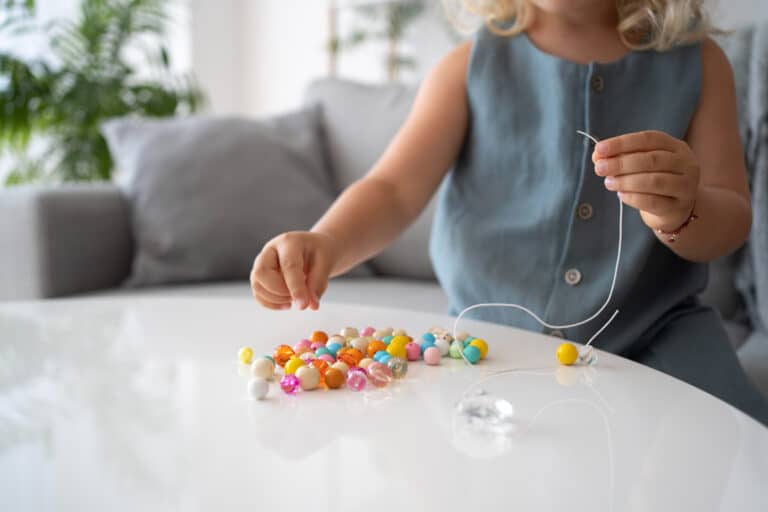
Activities like threading beads, using scissors, or painting with a brush help children:

Strengthen hand and finger muscles

Improve hand-eye coordination

Build focus and persistence

According to NAEYC, play helps children practice and refine motor skills while building confidence and resilience.

Through play, children develop precision and control without even realizing they’re practicing. From opening lunchboxes to writing their names, these skills empower them to engage fully in the world around them.

See how early childhood education and fine motor deveopment is supported by ActivityBox

Learning Through Play: A Child’s Natural Superpower

There’s a moment, somewhere between giggles and glitter, when a child becomes completely absorbed in their own world. Maybe they’re astronauts launching from the sofa. Maybe they’re scientists, elbows-deep in color-mixed goo. Whatever the setting, the learning is real.

But here’s the catch: they don’t know they’re learning. And that’s the magic.

In play, children build entire systems of understanding. They experiment with rules. They stretch language, test boundaries, and begin to make sense of things far bigger than themselves.

Harvard’s Center on the Developing Child calls play “essential,” not optional. It’s through play that children develop the brain functions that support attention, memory, flexibility, and emotional growth.

Learning through play:

Boosts imagination and curiosity

Reinforces early math, science, and language skills

Teaches collaboration and emotional regulation

That’s why every ActivityBox project is designed with play at its heart. Our projects invite children to explore real-world themes – from outer space to restaurants – sparking questions, stories, and discoveries along the way.
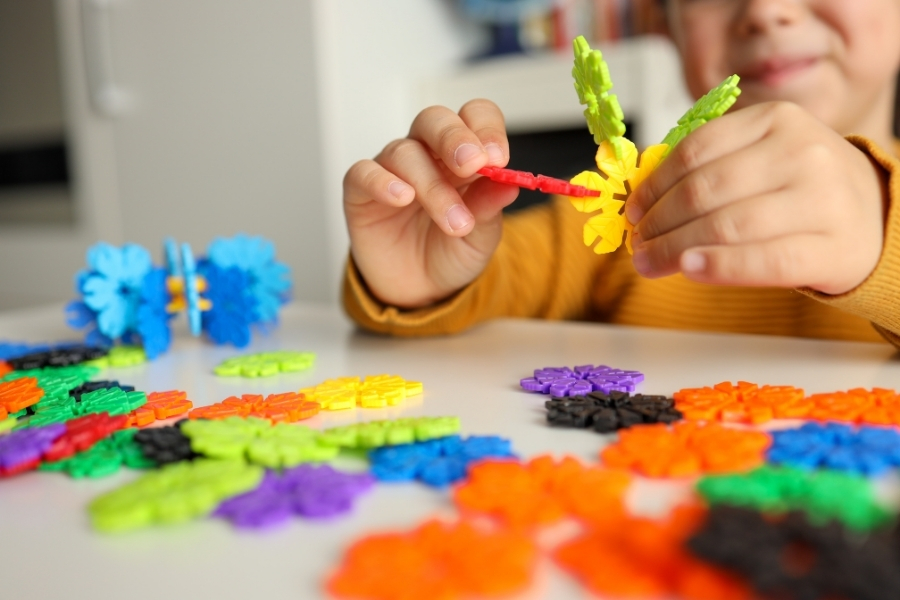
A young child building with interlocking disc toys, developing fine motor skills and creativity through early childhood education play.

Explore how each ActivityBox Theme supports early childhood education

How Play-Based Learning Sparks Real Growth

Not all play is created equal. What truly fuels early development is purposeful, imaginative, and hands-on play guided, but never rigid.

At ActivityBox, that’s exactly what our approach delivers. Our Discover → Make → Play framework is a simple, research-backed model that supports creative growth at every stage.

The Discover → Make → Play Framework

PhaseFocus AreaWhy It Matters
DiscoverSpark CuriosityKids explore new materials and ideas, boosting observation, inquiry, and a love of discovery.
MakeHands-On CreativityChildren turn ideas into tangible projects, learning through experimentation and building resilience.
PlayImaginative LearningThey bring creations to life through pretend play, storytelling, and social connection.

Kids bring creations to life through pretend play, storytelling, and social connection.

This method encourages children to follow their curiosity, test their ideas, and share what they’ve created, all in one joyful cycle. It meets them where they are, then gently expands their confidence and skills.

Learn more about the Discover → Make → Play Framework

Why Imaginative Play Belongs in Early Education

Imaginative play is a central part of how young children make sense of the world. When they act out everyday roles or dream up fantastical scenarios, they’re learning how to think flexibly, communicate ideas, and manage emotions in real time.

These experiences support key developmental goals in early childhood education, from cognitive growth to emotional regulation and social connection. Pretend play introduces children to ethical thinking, encourages perspective-taking, and nurtures curiosity.

One mother shared how her daughter Maya, age five, struggled with separation during preschool drop-off. Together, they created daily role-play games where Maya took the lead, becoming a teacher, a helper, or an explorer. Over time, Maya began approaching real-life transitions with more confidence and calm.

The Hong Kong Education Bureau highlights early education as a foundation for developing creativity, intellect, and ethics, qualities deeply supported by imaginative play.

When early learning environments make space for pretend, children don’t just stay engaged, they grow in ways that prepare them for lifelong learning.

Support Early Learning Where It Matters Most — Ages 3–8

In Hong Kong, the early school years lay the foundation for lifelong learning. As your child settles into the new term, you can support their growth at home with creative, hands-on activities that align with what they’re learning in class.

Here’s how to build confidence and curiosity at home:

Follow your child’s lead with open-ended play

Introduce real-world themes through stories and making

Encourage exploration, not perfection

Create small moments of learning every day

Bring early childhood education to life at home with ActivityBox. Join today

FAQs About Early Childhood Education

What age is best to start early childhood education?

Most children in Hong Kong begin K1 around age 3, but early education truly starts much earlier through songs, stories, and play in everyday life. These early interactions help build the foundations for language, curiosity, and emotional development.

How do I know if my child is learning enough through play?

Watch how your child explores, asks questions, and invents stories. These are strong signs of learning. If they’re engaged, experimenting, or using new words, they’re developing key skills even if it looks like simple fun.

Is preschool necessary for success later in life?

While not mandatory, high-quality early childhood education supports lifelong success by building cognitive, emotional, and social foundations. Programs that include play-based and hands-on learning are especially effective.

My child prefers playing alone. Is that okay?

Yes. Independent play encourages focus, imagination, and confidence. Over time, many children naturally move toward more social play, especially when adults offer gentle opportunities to connect.

How can I support my child’s transition into K1 or a new school year?

Start by creating a steady routine and plenty of play-based time at home. Talk about what school might be like through pretend play or storybooks, and encourage independence with small tasks like packing a bag or putting on shoes. Children adjust best when they feel secure, capable, and supported in both structured and creative ways.

Can ActivityBox help supplement preschool or kindergarten learning?

Yes. ActivityBox kits are designed to align with early learning goals including creativity, problem-solving, fine motor development, and expressive language. Each project supports what your child is already learning, while making space for open-ended discovery at home.

Have more questions?

We’re here to help! Contact us .

fine motor milestones cutting scissors

Fine Motor Milestones for Kids Aged 4–8

fine motor milestones cutting scissors

Fine Motor Milestones for Kids Aged 4–8

Key Takeaways

AspectSummary
Why This Topic MattersMilestones help parents track school readiness and independence.
Cognitive BenefitsSupports planning, memory, and early academic skills.
Problem-Solving BenefitsEncourages persistence and adaptive thinking in daily tasks.
Emotional DevelopmentBuilds self-esteem as kids gain confidence in self-care and play.
Practical ApplicationsPrepares kids for writing, dressing, tool use, and classroom tasks.

Why Tracking Fine Motor Milestones Matters

Every parent wonders: “Is my child developing on track?” Between ages 4 and 8, children’s fine motor milestones shape their ability to thrive at school and in daily life. From holding a pencil to tying shoelaces, these skills are the invisible scaffolding that supports independence.

One Hong Kong parent shared how her daughter, age 6, was eager to write but struggled with scissors. With guided milestone activities, she blossomed into a confident creator, turning craft time from tears into pride.

Research shows that consistent monitoring of motor skill checklists helps spot delays early and celebrate strengths. According to the Hong Kong Reference Framework for Preventive Care, children aged 4–6 are expected to use scissors, manage buttons, and hold pencils with control: key indicators for later school success.

Age-Based Fine Motor Milestones (Ages 4–8)

Understanding age-appropriate development is key. Here’s a simplified guide to what children typically master at each age:

AgeKey MilestonesSigns of Readiness
4Copies shapes, cuts along lines, builds towersShows interest in drawing
5Buttons clothes, draws basic peopleEnjoys tracing and sticker play
6Cuts accurately, ties simple knotsBegins writing letters clearly
7Uses tools for detailed crafts, folds paperManages zippers and snaps
8Writes fluently, creates intricate designsHandles multi-step tasks

These developmental benchmarks provide a framework, not a finish line. Children may advance faster in one area and need extra time in another, and that’s okay.

Did You Know?

According to NAEYC’s developmental stages, fine motor growth is a foundation for school readiness and emotional confidence.

Supporting Milestones With Hands-On Play

Fine motor skills don’t flourish by accident. Children need regular, playful practice with tools and materials. Encourage progress by:

Offering craft projects that match current ability (simple snips for 4-year-olds, knot-tying for 6-year-olds).

Creating motor skill checklists at home: e.g., “today we practiced cutting, tomorrow we’ll try buttons.”

Consulting trusted milestone resources like the CDC’s developmental milestones tracker if concerned about delays.

According to Harvard’s insight on fine motor development and school readiness, early motor skills support later academic outcomes and help prepare children for formal learning environments.

Try these milestone-matching activities at home:

  • Age 4: Tear colored paper to create simple collages
  • Age 5: Use buttons, beads, or lacing cards
  • Age 6: Create 3D paper sculptures using scissors and tape
  • Ages 7–8: Build models or complete intricate sticker patterns

Looking beyond age 5, the Raising Children Network’s guide to ages 6–8 outlines expectations like cutting irregular shapes, writing on the line, and improved hand strength.

👉 To understand the bigger picture of why these skills matter, explore what are fine motor skills and why they matter.

screen-free activities for kids

Get the Free Playbook for Easy Fine Motor Activities

Learn how hands-on play helps your child develop problem-solving, creativity, and confidence, without screen time or prep.

Hands-on, screen-free activities

Printable planner included

Stress-free and fun for parents

Expert-designed, child-approved

Emotional Wins: Celebrating Small Successes

Parents often focus on “what should be next,” but don’t forget to pause and honor what’s already been achieved. Completing a task independently, whether it’s using scissors or drawing a picture, boosts more than coordination. It fosters pride.

One grandfather in Kowloon shared how his grandson, Leo (age 6), grinned ear to ear after finally tying his shoelaces. That small win became a big confidence boost that rippled into school participation and social connection.

And if your child seems behind on basic motor tasks like using scissors or dressing themselves even after starting K‑1 or K‑2, the Family Health Service advice on fine motor delays in K‑1/K‑2 outlines when it’s time to check in with a doctor or seek extra support.

Encourage your child with phrases like:

“You really focused on that, well done!”

“Look how much easier that was than last time.”

“Wow, your fingers are getting so strong!”

See how hands-on play strengthens both skill types

Fine Motor Milestones for Kids Aged 4–8

How ActivityBox Helps Children Reach Milestones

ActivityBox’s Discover – Make – Play framework naturally supports milestone tracking. Each themed kit offers activities designed to strengthen motor control through crafts, tool use, and storytelling.

Every ActivityBox kit is designed with age-appropriate development in mind. Our model ensures each project is:

  • Developmentally aligned
  • Tactile and tool-based
  • Confidence-building through creativity

Whether your child is working on cutting, zipping, or writing, ActivityBox offers ready-to-go tools and activities that nurture each fine motor milestone.

Help Your Child Thrive Ages 4–8

Every child develops at their own pace, but knowing typical fine motor milestones provides reassurance and direction. By blending playful practice with encouragement, you can nurture independence, confidence, and school readiness.

Track milestones regularly

Support skills with hands-on play

Celebrate small wins to fuel resilience

Use expert-backed resources for guidance

Want a ready-made way to build these skills at home?

Support your child’s journey with ActivityBox. Join today and get monthly hands-on activities that spark creativity and build essential skills delivered to your home, no prep required.

FAQs About Fine Motor Milestones

How can I tell if my child is behind in fine motor development?

Start with supportive play at home. If you notice consistent struggles compared to peers, consult an occupational therapist or pediatrician.

Why are milestones important?

They provide a framework to track progress and ensure children are ready for school tasks like writing and self-care.

Do screen-based games count as fine motor practice?

Not really. While tapping can build finger familiarity, screen time doesn’t replace the complex motions involved in cutting, drawing, or lacing.

What tools help me track progress?

Use a motor skill checklist, progress journal, or apps with developmental prompts. Our Activity Playbook includes built-in tracking tools.

Can children “catch up” if delayed?

Yes. With early support and playful practice, many kids close the gap quickly. Trusted resources like Zero to Three recommend intervention through daily routines.

Can ActivityBox help with skill development?

Absolutely. Each box is designed with age-appropriate projects that support milestones like grip strength, hand-eye coordination, and sequencing. All Plans are risk-free, cancel anytime, and include free shipping in Hong Kong.

Have more questions?

We’re here to help! Contact us .

Parent-Child Bonding Through Play Why It Matters

Parent-Child Bonding Through Play: Why It Matters & How to Nurture It

Parent-Child Bonding Through Play Why It Matters

Parent-Child Bonding Through Play: Why It Matters & How to Nurture It

AspectSummary
Why This Topic MattersStrong bonds in early childhood lay the foundation for lifelong emotional wellbeing.
Cognitive BenefitsPlay-based bonding builds focus, language development, and executive function.
Problem-Solving BenefitsCollaborative play nurtures critical thinking and adaptive learning.
Emotional DevelopmentRegular shared play strengthens empathy, resilience, and trust.
Practical ApplicationsFamily rituals and creative projects provide daily bonding opportunities.

Creative Play as the Heart of Parent-Child Connection

Picture this: It’s Saturday morning, and instead of watching cartoons, your child is elbow-deep in glue and construction paper, next to you. You’re laughing, working together, inventing your own little world. These moments are cute, but also they’re core to parent-child bonding through play.

In the early years, play isn’t just how children learn, it’s also how they connect emotionallydevelop trust, and form secure attachments. Research shows that shared activities build the emotional scaffolding children need to thrive long-term. That’s why prioritizing creative play in your family routine is more than just fun, it’s fundamental.

Let’s explore why bonding through hands-on activities matters and how it can fit into your everyday family rhythm.

Why Parent-Child Bonding Is Critical in Early Childhood

Every child needs love, safety, and consistency – but how we show up matters. During early development, bonding experiences shape a child’s emotional regulation, self-esteem, and even future relationships.

According to the Center on the Developing Child at Harvard, responsive, nurturing relationships are the most powerful builders of brain architecture in young children. Serve-and-return interactions are one of the most effective ways to do this through play.

When bonding happens through creative family time, it adds a dynamic layer: discovery, fun, and partnership. A shared activity like painting, storytelling, or building something together becomes more than just a task – it’s a moment of eye contact, shared laughter, and gentle guidance.

Parents of young children, especially those aged 3–6, often struggle to balance screens, structured activities, and real connection. The good news? You don’t need hours. Just 15–30 minutes of focused, playful interaction each day can create meaningful emotional deposits.

Try this: Pick one recurring “ritual” that becomes your family’s thing. It could be Saturday sketch sessions or weekday wind-down storytelling. Rituals = bonding glue.

Parent-Child Bonding Through Play Why It Matters

By incorporating simple, open-ended projects, families can foster developmentally rich experiences. That’s exactly what the Creative Thinking Program is designed to support, making creativity easy, structured, and rewarding.

How Creative Play Builds Stronger Family Connections

What makes parent-child connection activities truly powerful is how they engage both sides of the brain – logic and emotion – while deepening the relationship. Hands-on play prompts collaboration, imagination, and problem-solving in real time.

Children learn by doing. But they remember by feeling. According to the CDC, engaging in child-led special playtime activities helps nurture emotional closeness, trust, and confidence in young children.

Real-life example: Five-year-old Talia and her dad spent each Sunday designing new animals out of craft scraps. Talia called them “scrappy pets.” Weeks later, when asked what she loves about Sundays, she simply said, “Because we make pets.”

Creative projects also offer built-in roles for collaboration:

You’re the co-builder, not the boss.

Mistakes become moments of shared learning.

Completion becomes celebration, not perfection.

The goal? Less pressure, more presence.

Parent-Child Bonding Through Play at Home

To make playtime more intentional, many families are turning to curated resources like the monthly ActivityBox kits, which deliver hands-on activities designed to encourage creativity and bonding without the prep.

Weekend Projects That Strengthen Family Bonds

Not every family can commit to elaborate projects – and that’s okay. The beauty of family play rituals lies in consistency, not complexity.

Here are a few weekend-ready ideas that build parent-child bonding through play without needing to overplan:

Project IdeaBonding BenefitTime Needed
DIY Puppet TheaterEncourages storytelling & empathy45 min
Family Obstacle CourseBuilds teamwork, trust, and laughter30 min
Nature Scavenger HuntFosters curiosity & shared discovery1 hour
“Invent a Game” ChallengeSparks collaboration & problem-solving20 min

Each of these activities invites shared projects, decision-making, and celebration – ingredients that reinforce connection.

A Hong Kong-based study of the PLAYBAG co-creation play model found that shared free play environments significantly enhanced emotional regulation and bonding between children and caregivers.

For families looking to make playtime more accessible, especially across households, gifting a custom ActivityBox subscription is a fun way to encourage meaningful connection between children and grandparents, co-parents, or caregivers.

screen-free activities for kids

Get the Free Playbook for Easy Fine Motor Activities

Learn how hands-on play helps your child develop problem-solving, creativity, and confidence, without screen time or prep.

Hands-on, screen-free activities

Printable planner included

Stress-free and fun for parents

Expert-designed, child-approved

Turning Everyday Moments into Meaningful Connections

When families prioritize parent-child bonding through play, the results ripple far beyond the craft table or scavenger hunt trail.

Here’s how you can help:

Emotional development improves through safe, nurturing interaction

Shared rituals foster confidence, empathy, and resilience

Creative play becomes a trusted language of connection

Daily life transforms into a meaningful memory bank

Next time you have a free half-hour, skip the screens. Pick up scissors, crayons, and curiosity instead. You might be surprised how much connection you can create in a single afternoon.

👉 Join the Creative Thinking Program and nurture deeper family bonds through guided play projects every month.

FAQs About Parent-Child Bonding Through Play

What are the best activities to strengthen parent-child bonds?

Activities that involve collaboration, imagination, and shared success – like building crafts, storytelling, cooking together, or scavenger hunts – are ideal. The key is presence over perfection.

Why is play so important for family relationships?

Play lowers stress, creates positive shared experiences, and helps children feel seen, safe, and supported. It’s a natural way to build attachment and trust.

What does the research say about bonding through play?

According to Harvard’s Center on the Developing Child, serve-and-return interactions are crucial to developing strong brain architecture and social-emotional skills.

How can I bond with my child if I don’t have much time?

Even short rituals like 15-minute art time or evening story swaps can build strong connections. Consistency and attention matter more than duration.

How does ActivityBox support bonding through play?

Every box includes tools and guided activities that encourage cutting, shaping, building, and more all designed by educators to develop small muscle control naturally.

How do I join?

Choose the plan that fits your family: 1-Month, 3-Month, or 6-Month Bundle directly on our Join page. All Plans are risk-free, cancel anytime, and include free shipping in Hong Kong.

Have more questions?

We’re here to help! Contact us .

What are fine motor skills tying laces

What Are Fine Motor Skills? Definition & Milestones

What are fine motor skills tying laces

What Are Fine Motor Skills? Definition & Milestones

What Are Fine Motor Skills and Why Do They Matter?

AspectSummary
DefinitionFine motor skills involve small muscle control in hands and fingers.
Why They MatterCritical for independence, writing, self-care, and cognitive growth.
Developmental WindowBuilds steadily from toddler years through early primary school.
Signs of DelayDifficulty with grasping, buttoning, or cutting tasks.
Ways to Build SkillsHands-on crafts, sensory games, and everyday object manipulation.

Understanding the Basics: What Are Fine Motor Skills?

Fine motor skills refer to the precise movements of the small muscles in the hands, fingers, and wrists, movements we use to write, eat, button clothes, and play with blocks.

Tip for Parents:

Fine motor development is a core milestone in early childhood, affecting not just writing but also self-care and school readiness.

Unlike large movements like jumping or running (gross motor skills), fine motor movements are subtle but crucial. From holding a pencil to zipping a backpack, children rely on these skills every day.

According to CDC developmental milestones, fine motor growth begins as early as infancy, when babies reach for toys or hold your finger, and continues rapidly through preschool and early elementary years. 

Hong Kong’s EDB’s overview of fine motor development across the lifespan reinforces that small muscle control supports independence and learning across all age stages.

Why Fine Motor Skills Matter in Early Childhood

When children struggle with tasks like cutting paper, drawing, or using utensils, they may feel discouraged and frustrated. Over time, this can affect their confidence, participation, and even classroom performance.

According to NAEYC’s principles linking fine motor skill development with cognitive and emotional growth, motor skill development is deeply intertwined with a child’s cognitive, social, and emotional growth.

Well-developed fine motor skills enable:

Independent self-care (feeding, brushing teeth, dressing)

Better handwriting and pre-literacy skills

Participation in group play and arts-based activities

Greater persistence and task-following ability

The importance of small muscle control becomes especially clear around ages 4–6, when early writing and classroom expectations begin.

Explore the link between fine motor skills and school success

Fine vs. Gross Motor Skills: What’s the Difference?

Skill TypeExamplesMuscles Used
Fine Motor SkillsHolding a crayon, buttoning a shirtFingers, hands, wrists
Gross Motor SkillsRunning, hopping, catching a ballArms, legs, torso

Development in both areas is essential. But fine motor skills are often harder to spot until a child is expected to sit, draw, or write for extended periods.

Encouraging both types of movement ensures balanced growth and prepares children for both physical activity and academic challenges.

See how hands-on play strengthens both skill types

Common Developmental Milestones by Age

Knowing when and how fine motor skills typically emerge can help parents spot strengths or areas for support.

Age RangeTypical Fine Motor Skills
2–3 yearsTurns pages, scribbles, stacks blocks
3–4 yearsUses scissors, draws simple shapes
4–5 yearsButtons clothes, copies letters and numbers
5–6 yearsPrints own name, ties shoelaces
6–7 yearsWrites sentences, cuts complex shapes, builds detailed models
8+ yearsUses tools accurately (ruler, stapler), maintains legible handwriting

Keep in mind: Every child develops at their own pace. Look for gradual improvement and enjoyment of hands-on tasks.

Delays in fine motor skill development aren’t always a cause for concern, but consistent difficulty may warrant extra support or guidance from a pediatrician or occupational therapist.

Download the Fine Motor Skills Activity Playbook

What are Fine Motor Skills?  Threading beads

Everyday Activities That Build Fine Motor Control

You don’t need fancy tools or formal classes to support your child’s fine motor growth. Daily tasks offer plenty of opportunities for practice.

Try These:

Sorting coins or small buttons

Threading pasta or beads onto yarn

Peeling stickers or opening containers

Using tongs or tweezers for sensory play

NAEYC’s guide to building fine motor strength and coordination recommends consistent, playful tasks using everyday materials to build control and confidence.

Hong Kong EDB’s pre‑primary curriculum guide recommends fine motor‑building activities like threading, puzzles, and playdough to foster creativity and muscle coordination in early learners.

The key is repetition and variety: changing materials, settings, and levels of challenge to keep children engaged.

screen-free activities for kids

Get the Free Playbook for Easy Fine Motor Activities

Learn how hands-on play helps your child develop problem-solving, creativity, and confidence, without screen time or prep.

Hands-on, screen-free activities

Printable planner included

Stress-free and fun for parents

Expert-designed, child-approved

Help Your Child Build Confidence Through Fine Motor Play

It’s easy to overlook just how hard it is to tie shoes, open lunchboxes, or write a name. But these tasks are huge milestones for young kids.

Here’s how you can help:

Encourage your child to try new hand-based tasks (even if messy!)

Praise their effort, not just results

Keep tools like crayons, scissors, and tweezers accessible

Use screen-free time for puzzles, crafts, and tactile play

Want a ready-made way to build these skills at home?

👉 Join ActivityBox for monthly activity kits that support fine motor, problem-solving, and creativity, without any prep required.

FAQs About Fine Motor Skills Development

How can I tell if my child is behind in fine motor development?

Look for signs like avoiding puzzles, struggling with dressing, or frustration during crafts. If concerns persist, consult your pediatrician.

Are fine motor skills more important than gross motor skills?

Both are essential. Gross motor builds physical coordination, while fine motor supports school tasks and independence.

At what age should kids start cutting with scissors?

Many begin safely exploring scissors around age 3–4, starting with snipping paper strips and progressing to shapes.

Can screen time impact fine motor development?

Yes. Excessive screen time may limit hands-on play opportunities. Encourage tactile, creative tasks during off-screen hours.

How can ActivityBox support my child’s motor skill growth?

Every box includes tools and guided activities that encourage cutting, shaping, building, and more all designed by educators to develop small muscle control naturally.

How do I join?

Choose the plan that fits your family: 1-Month, 3-Month, or 6-Month Bundle directly on our Join page. All Plans are risk-free, cancel anytime, and include free shipping in Hong Kong.

Have more questions?

We’re here to help! Contact us .

Fine Motor Skills Development Through Hands-On Play

Fine Motor Skills Development Through Hands-On Play

Fine Motor Skills Development Through Hands-On Play

Fine Motor Skills Development Through Hands-On Play

Key Takeaways

AspectSummary
Why It MattersFine motor skills support writing, self-care, and problem-solving.
Developmental BenefitsBoosts attention, memory, and sequencing through hands-on activities.
Hands-On PlayStrengthens planning, precision, and confidence in trial-and-error tasks.
Real-World StrategiesBuilds resilience and pride through task mastery.
Parent TipsPrepares children for tasks like writing, buttoning, and tool use.

Why Are Fine Motor Skills Essential for Early Learning?

Imagine a child trying to tie their shoes, grip a pencil, or cut out a paper shape. These everyday actions rely on finely tuned coordination between small muscles in their hands and fingers: a set of skills known as fine motor skills development.

A parent once shared how her son, Liam (age 5), struggled with frustration during art time because he couldn’t control his scissors. But after a few weeks of structured fine motor play, threading beads, sticker placement, and paper weaving, Liam not only gained control but began proudly showing off his creations.

Fine motor skills matter because they form the building blocks for independence, confidence, and academic readiness. They affect everything from early writing and drawing to personal care routines like eating or dressing. And best of all? They can be nurtured through creative, hands-on play.

What Are Fine Motor Skills and Why Do They Matter?

From zipping jackets to holding a paintbrush, fine motor skills help children interact with their world. They involve small muscle groups in the hands, wrists, and fingers, paired with hand-eye coordination and focus.

Tip for Parents:
According to CDC’s Act Early developmental milestone framework, consistent fine motor milestones are strongly linked to school readiness.

Children with underdeveloped fine motor control may struggle with everyday classroom tasks or become discouraged during art, writing, or group activities. These moments, if left unaddressed, can create barriers to self-esteem and learning momentum.

Solution: Support these skills through playful tasks like tearing paper, using tweezers, or sculpting with clay. NAEYC guidance outlines everyday activities that can boost fine motor strength and coordination.

Learn more about why fine motor skills matter

How Cutting and Gluing Activities Build Precision in Kids

Using scissors and glue sticks might seem simple, but they engage multiple skills: bilateral coordination, focus, grip control, and sequencing.

Start with tasks like:

Cutting along wavy or zigzag lines

Gluing small parts into matching patterns

Tracing shapes before cutting

Download the Fine Motor Skills Activity Playbook

Fine Motor Milestones for Kids Aged 4–8

Parents often ask: “Is my child on track?”
Understanding preschool motor skills milestones helps caregivers spot where extra support, or challenge, might be needed.

AgeKey MilestonesSigns of Readiness
4Copies circles, uses scissors, builds towersShows interest in drawing
5Buttons clothes, draws basic peopleEnjoys tracing, uses small stickers
6Cuts accurately, ties simple knotsBegins writing letters
7-8+Forms consistent handwriting, intricate craftsFolds paper neatly, fastens snaps

Tip: Kids develop at different rates, use these as flexible guidelines.

Creative Ways to Strengthen Dexterity in Preschoolers

Children don’t build muscle control by sitting still, they need movement, exploration, and novelty. The most effective fine motor play ideas are disguised as fun.

Try These:

Clothespin races: Strengthen finger muscles while grabbing items

Sensory bins with hidden treasures: Encourage grasping and sorting

Sticker mosaics: Refine pincer grip and precision

A preschool teacher in Central shared how one student, Chloe, who initially struggled to hold a pencil, dramatically improved her control after daily sensory play using tweezers and water beads.

screen-free activities for kids

Get the Free Creative Thinking Playbook

Learn how hands-on play helps your child develop problem-solving, creativity, and confidence, without screen time or prep.

Hands-on, screen-free activities

Printable planner included

Stress-free and fun for parents

Expert-designed, child-approved

Problem-Solving and Fine Motor Skills: A Perfect Match

Fine motor play doesn’t just strengthen muscles it boosts cognitive skills too.

Puzzles, mazes, and threading activities ask kids to plan, persist, and adapt, all while using their hands.

This aligns with NAEYC’s principle that play weaves fine motor learning into broader cognitive and emotional growth.

To blend thinking with movement:

Let kids create their own puzzles with cut paper

Use maze tracing with dry-erase markers

Offer pattern challenges using beads or buttons

These activities merge motor-cognitive connections, building resilience and executive function.

How ActivityBox Compares to Alternatives

FeatureActivityBoxKiwiCoDIY Activities
Subscription ModelMonthly, structured, themedMonthly, themed, variable levelSelf-guided, unstructured
ReusabilityYes (Tool Kit included)Some kits partially reusableDepends on materials
Screen-Free Design100% hands-onMostlyVaries
Learning StructureDiscover–Make–Play progressionVaries by boxUnstructured
Parent SupportStep-by-step guides + tipsModerate instructionNo guidance included
Focus on DexterityEmbedded into every projectVariesNeeds planning by parent
Eco-FriendlinessOver 60% recyclable packagingPartially eco-friendlyDepends on household items

Ready to get started? Join ActivityBox and get monthly, ready-to-play activities delivered to your door.

Help Your Child Thrive With Skill-Building Play

Every child deserves the joy of mastering new skills, and every parent deserves easy, meaningful ways to support that growth.

Here’s what you can do starting today:

  • Choose activities that match your child’s current abilities
  • Incorporate tactile materials like clay, buttons, or cotton balls
  • Make repetition fun with fresh, creative challenges
  • Celebrate effort, not just outcome

Ready to help your child build confidence and creativity through hands-on learning?

ActivityBox delivers hands-on learning kits that transform everyday moments into powerful play, developing fine motor skills the easy way.

Designed by educators

Loved by kids

No prep, just open and play

👉 Join today and get monthly, ready-to-play activities delivered to your door.

Get Started with ActivityBox →

FAQs About Fine Motor Skills Development

How can I tell if my child has fine motor delays?

If your child avoids pencil or scissor tasks, struggles with buttons, or gets easily frustrated during crafts, it may indicate they need more support. Always consult a pediatrician if concerned.

Why do fine motor skills develop before writing?

Before forming letters, kids need control of wrist, hand, and finger muscles. Building strength and coordination through play lays the foundation for writing fluency.

Are there specific tools that help fine motor growth?

Yes! Tools like child-safe scissors, tweezers, stickers, and lacing cards target different motor muscles and encourage precision.

My child gives up quickly on activities. What can I do?

Choose tasks that are just challenging enough. Offer encouragement, break steps down, and allow them to explore without pressure.

Can ActivityBox help improve my child’s motor skills?

Absolutely. Each kit is designed with layered activities that support motor development, problem-solving, and creative exploration, no prep required for you.

How do I join?

Choose the plan that fits your family: 1-Month, 3-Month, or 6-Month Bundle directly on our Join page. All Plans are risk-free, cancel anytime, and include free shipping in Hong Kong.

Have more questions?

We’re here to help! Contact us .

Screen Free Activities Alternative Activitybox

Screen-Free Activities for Kids: Engaging Alternatives That Spark Creativity

Screen Free Activities Alternative Activitybox

Screen-Free Activities for Kids: Engaging Alternatives That Spark Creativity

Key Takeaways

AspectSummary
Why It MattersScreen-free activities help reduce screen time while promoting creativity and focus.
Developmental BenefitsEncourages cognitive flexibility, problem-solving, and emotional resilience.
Hands-On PlayBuilds motor skills, imagination, and self-regulation.
Real-World StrategiesCrafting, sensory bins, and outdoor games offer fun offline alternatives.
Parent TipsSet routines, offer open-ended materials, and model screen-free behavior.

Why Reducing Screen Time Matters

Did you know that the average child under 8 now spends over two hours per day on screens. And that number rises sharply during weekends and school holidays?

While digital devices offer convenience and entertainment, research shows that excessive screen time can negatively affect brain development, attention span, emotional regulation, and even sleep quality. When screens replace open-ended play, kids miss out on key developmental milestones like problem-solving, creative thinking, and social skills.

In this article, we’ll explore what creativity looks like in young learners, why it matters, and how parents and educators can nurture it through play-based activities.

Research Insight:

According to the recommended guidelines from the American Academy of Pediatrics,, young children should be limited to one hour of high-quality screen time per day. And infants under 18 months should avoid screens altogether, except for video chatting.

Parents often feel stuck: screens keep kids entertained, especially during downtime, but what’s the alternative?

That’s where screen-free activities come in: engaging, hands-on experiences that foster imagination, motor skills, and emotional resilience without a device in sight.

📖 Related Read: The Role of Creativity in Child Development

What Are Screen-Free Activities?

Screen-free activities are any forms of play, exploration, or learning that engage children without the use of digital devices. Instead of passively consuming content, kids take an active role creating, experimenting, and imagining their way through the world.

These activities aren’t just “alternatives” to screens, they’re developmental powerhouses that promote focus, communication, independence, and curiosity.

Why They Work

Screen-free activities give children the time and space to:

Solve problems creatively

Build attention span through focused play

Explore their senses and motor skills

Express feelings through storytelling, drawing, or pretend play

They don’t require fancy supplies or rigid instructions, just open-ended materials and a little encouragement.

Quick Examples of Screen-Free Activities

Building a cardboard fort from leftover boxes

Exploring a sensory bin filled with rice, scoops, and cups

Playing “restaurant” with stuffed animals

Painting with cotton balls instead of brushes

These kinds of offline activities for kids aren’t just fun, they’re critical for healthy development.

The Benefits of Hands-On, Screen-Free Play

Replacing screen time with hands-on activities doesn’t just entertain kids, it transforms their development.

From a neurological standpoint, open-ended, screen-free play strengthens brain pathways responsible for memory, decision-making, and flexible thinking. When children engage their hands and imagination, they’re also building emotional resilience and social confidence.

Research Insight:
A study by the National Association for the Education of Young Children (NAEYC) found that unstructured, tactile play improves executive functioning in early learners, particularly skills like self-regulation, planning, and adaptability.

A Pediatrics study linking pretend play with language and problem-solving shows that preschoolers who engaged in regular imaginative play had better language development and problem-solving abilities than their screen-heavy peers.

“When children play creatively, they rehearse social roles, practice empathy, and learn to self-soothe.”

– Dr. Susan Linn Commercial-Free Childhood

The UCLA study on how screen-free time improves social skills supports similar findings: kids with reduced screen exposure were significantly better at reading emotional cues in face-to-face settings.

What Happens During Hands-On Play?

Skill AreaHow Screen-Free Play HelpsExamples
Cognitive GrowthEnhances focus, logic, and innovationPuzzle building, sensory bins
Emotional SkillsBuilds confidence and emotional regulationStorytelling, expressive art
Social DevelopmentEncourages empathy, turn-taking, cooperationRole-playing, group games
Motor SkillsDevelops coordination and dexterityCutting paper, clay modeling
Screen-free activities alternatives hands-on play

💡 Read more at Harvard’s Center on the Developing Child on brain-building through play

Easy & Effective Screen-Free Ideas at Home

Wondering how to keep kids engaged without a screen, especially during rainy afternoons or quiet weekends?

The good news is, screen-free doesn’t mean boring or complicated. The best activities are low-prep, open-ended, and often use materials you already have at home. These ideas foster creativity, fine motor skills, and emotional development while giving kids a sense of independence.

From a neurological standpoint, open-ended, screen-free play strengthens brain pathways responsible for memory, decision-making, and flexible thinking. When children engage their hands and imagination, they’re also building emotional resilience and social confidence.

Tip for Parents:
Keep a “screen-free bin” filled with loose parts (fabric scraps, bottle caps, cardboard tubes) so kids can create freely when they’re bored.

5 Simple Screen-Free Activities to Try Today

ActivityWhat It BuildsMaterials Needed
DIY Story StonesLanguage + ImaginationRocks, markers or stickers
Build a Sensory PathMotor planning + focusTape, textured objects
Paper Bag PuppetsSelf-expressionPaper bags, crayons, glue
Living Room Obstacle CourseGross motor + problem-solvingPillows, chairs, tape
Nature Treasure HuntObservation + curiosityPrintout list, outdoor time

Try this toolkit from UNICEF and Harvard for age-based play activities

screen-free activities for kids

Get the Free Creative Thinking Playbook

Learn how hands-on play helps your child develop problem-solving, creativity, and confidence, without screen time or prep.

Hands-on, screen-free activities

Printable planner included

Stress-free and fun for parents

Expert-designed, child-approved

How Parents Can Set Up Screen-Free Routines

Making screen-free activities part of daily life isn’t about removing devices entirely, it’s about creating healthy routines and engaging alternatives that kids enjoy.

The key? Consistency, creativity, and modeling the behavior you want to see.

Create Screen-Free Zones at Home

Ideas for a Screen-Free Zone:

A corner with a rug, art supplies, and books

A low shelf stocked with puzzles and open-ended toys

A kitchen table reserved for crafting and family games

📖 Related Read: How to Set Up a Screen-Free Zone in Your Home

Model Healthy Screen Habits

Children mimic what they see. When parents put down their phones and engage in play or conversation, kids are more likely to follow.

Strategy: Create “no screen times” during meals, bedtime routines, or the first hour after school.

Build Daily Routines Around Play

Even 15–30 minutes a day of unplugged, creative activity can dramatically reduce screen dependency.

Try This Weekly Plan:

DayActivityDuration
TuesdayStorytelling with props20 minutes
WednesdayOutdoor nature walk30 minutes
FridayDIY craft challenge25 minutes
SaturdayCooking or baking together30 minutes
SundayFamily game night45 minutes

See how our hands-on activities make it easy: no prep, no fuss, just hands-on fun with your kids.

View the Program →

Final Thoughts: Bring More Creativity Into Everyday Life

Screen-free activities aren’t just “alternatives” to devices, they’re tools for growth, exploration, and connection.

When children have opportunities to build, create, and imagine, they develop the skills that truly matter: focus, flexibility, confidence, and empathy.

Here’s what to remember:

  • Reducing screen time doesn’t require drastic changes, just consistent, engaging alternatives.
  • Simple, hands-on activities can dramatically boost cognitive and emotional development.
  • Parents can lead by creating routines, modeling healthy habits, and offering open-ended materials.

Parents often feel stuck: screens keep kids entertained, especially during downtime, but what’s the alternative?

Want to make screen-free play easy, creative, and consistent?

ActivityBox delivers hands-on learning kits that transform everyday moments into powerful play, without a screen in sight.

Designed by educators

Loved by kids

No prep, just open and play

👉 Join today and help your child explore a world beyond the screen.

Get Started with ActivityBox →

FAQs About Screen-Free Activities

What are screen-free activities for kids?

Screen-free activities are hands-on, creative experiences like crafts, storytelling, and sensory play, that help kids learn and grow without using digital devices.

Why should I limit my child’s screen time?

Too much screen time can impact attention span, emotional regulation, and sleep. Reducing it encourages healthier brain development and more meaningful play.

How do I get my child interested in screen-free play?

Offer choices, use open-ended materials, and participate with them. Make the activity feel fun, not a punishment for losing screen time.

What’s a good screen-free routine for busy families?

Start with 20–30 minutes a day. Try crafts on weekdays, outdoor play on weekends, and “tech-free” zones in your home to support new habits.

Can ActivityBox help reduce screen dependency?

Yes! Each kit includes pre-planned, screen-free projects that spark creativity and give kids something engaging to look forward to.

How do I join?

Choose the plan that fits your family: 1-Month, 3-Month, or 6-Month Bundle directly on our Join page. All Plans are risk-free, cancel anytime, and include free shipping in Hong Kong.

Have more questions?

We’re here to help! Contact us .

imaginative-play-and-cognitive-growth-kids-role-playing-featured Two young children engaged in imaginative role-playing as doctors, using pretend medical tools to enhance cognitive growth, creativity, and problem-solving skills

Imaginative Play and Cognitive Growth: Why Pretend Play Builds Smarter Kids

Two young children engaged in imaginative role-playing as doctors, using pretend medical tools to enhance cognitive growth, creativity, and problem-solving skills

Why Imaginative Play is Essential for Cognitive Growth in Kids

Key Takeaways

AspectSummary
Why This Topic MattersImaginative play strengthens cognitive flexibility, creativity, and problem-solving skills.
How Role-Playing Enhances IntelligenceRole-play allows children to practice decision-making, memory retention, and adaptability.
The Science of StorytellingNarratives enhance verbal skills, logical thinking, and emotional intelligence.
Symbolic & Fantasy PlayEncourages abstract thinking and prepares children for real-world learning.
Practical ApplicationsParents and educators can incorporate storytelling and pretend play into daily learning.

Why Imaginative Play is Essential for Brain Development

Did you know that imaginative play helps children develop cognitive flexibility, problem-solving skills, and emotional intelligence? Research shows that pretend play, storytelling, and role-playing enhance memory, logical thinking, and communication skills.

This article explores how imaginative play shapes intelligence and how parents and educators can use it to support a child’s cognitive growth.

📖 Related Read: How Creative Play Enhances Emotional Intelligence

What is Imaginative Play?

Imaginative play, also called pretend play or symbolic play, is when children create make-believe scenarios, role-play characters, and use objects in creative ways.

Examples of Imaginative Play

  • Role-Playing – Acting as a doctor, teacher, or superhero.
  • Storytelling – Creating narratives using toys, dolls, or drawings.
  • Fantasy Play – Pretending to explore outer space or fight dragons.
  • Symbolic Play – Using a banana as a phone or a box as a spaceship.

🔍 Example:
A child pretending to be a chef in a play kitchen learns about organization, sequencing, and communication while enhancing creativity and decision-making.

📖 External Source: Learn more about Daniel Goleman’s EQ model.

🔬 Research Insight:
According to Psychology Today, early pretend play enhances a child’s capacity for cognitive flexibility and creativity, strengthening their ability to think abstractly and solve complex problems.

The Cognitive Benefits of Imaginative Play

How Role-Playing Strengthens Brain Development

Imaginative play activates multiple cognitive functions, including:

  1. Memory retention – Remembering story details and character roles.
  2. Decision-making skills – Making choices in pretend scenarios.
  3. Problem-solving abilities – Thinking through obstacles creatively.

🔬 Research Insight:
A study from the National Association for the Education of Young Children (NAEYC) found that role-playing improves executive function skills, helping children develop better focus and self-regulation.

📖 External Source: Read the full NAEYC study.

The Science Behind Storytelling and Cognitive Growth

Storytelling allows children to connect ideas, develop verbal skills, and understand cause-and-effect relationships.

🔍 Example:
 When children make up stories about their toys, they practice sequencing events and structuring narratives, which strengthens language and logical reasoning.

📖 Related Read: The Link Between Creativity and Childhood Development

🔬 Additional Research:
According to Kids First, pretend play provides a safe space for children to express feelings, build resilience, and develop self-regulation, which are key contributors to cognitive development.

How Symbolic Play Encourages Abstract Thinking

Symbolic play helps children understand complex concepts by representing them with simple objects.

🔍 Example:
A child pretending that a box is a spaceship is developing spatial awareness, problem-solving skills, and abstract reasoning.

Symbolic Play Activities That Boost Cognitive Skills:

  • Building pretend worlds with household objects.
  • Role-playing as characters from books or movies.
  • Setting up a play store with toy money to practice math skills.

📖 Related Read: Cognitive Benefits of Creative Play

Long-Term Learning Benefits of Imaginative Play

How Fantasy Play Prepares Kids for Real-World Learning

Fantasy play allows children to:

  • Experiment with different perspectives – Builds empathy and emotional intelligence.
  • Strengthen creativity and innovation – Helps with divergent thinking.
  • Develop resilience – Encourages trying different approaches when facing a challenge.

🔍 Example:
A child pretending to run a pet shop learns social skills, business concepts, and responsibility in a fun and engaging way.

📖 Explore More: ActivityBox Monthly Creative Thinking Program

Want even more brain-boosting activities?

 Discover easy, screen-free ways to help your child grow creativity and confidence at home.

Get the Free Playbook

How Parents & Educators Can Encourage Imaginative Play

Encouraging Role-Play at Home

  • Provide dress-up clothes, props, and open-ended toys.
  • Ask open-ended questions like, “What happens next in your adventure?”
  • Join in the play and expand their narratives.

🔍 Example Activity:
Set up a pretend restaurant where kids take orders, cook play food, and serve customers.

Classroom Strategies for Enhancing Imaginative Play

  • Encourage collaborative art projects to build teamwork.
  • Use puppets or dolls to demonstrate handling conflicts.
  • Play “emotion matching” games where children match facial expressions to emotions.

📖 Explore More: ActivityBox Monthly Creativity Kits for Schools

Key Takeaways and Next Steps

  1. Imaginative play builds cognitive flexibility, memory, and problem-solving skills.
  2. Role-playing and storytelling strengthen language development and social intelligence.
  3. Symbolic play encourages abstract thinking and prepares kids for real-world learning

👉 Support your child’s cognitive growth with ActivityBox’s creativity-focused learning kits!

Join Today!

FAQs About Early Childhood Development

Q: How does imaginative play help cognitive growth?

A: Imaginative play strengthens problem-solving, memory, and abstract thinking, helping children develop flexible learning skills.

Q: What is an example of pretend play that boosts intelligence?

A:  Role-playing as a shopkeeper or doctor helps kids practice math, communication, and problem-solving.

Q: How does storytelling improve cognitive development?

A: Storytelling enhances language skills, logical thinking, and emotional intelligence by helping children connect ideas.

Q: What are some activities that encourage imaginative play?

A:  Dramatic role-playing, open-ended storytelling, and symbolic play with everyday objects all foster creativity.

Still have more questions?

We’re here to help! Contact us →

Creative Thinking Playbook

Get the Free Creative Thinking Playbook

Learn how hands-on play helps your child develop problem-solving, creativity, and confidence, without screen time or prep.

Hands-on, screen-free activities

Printable planner included

Stress-free and fun for parents

Expert-designed, child-approved

How Creativity Boosts Problem-Solving Skills in Early Childhood

A visual representation of creativity and problem-solving in early learning. Two children engaged in a hands-on creative puzzle activity, developing problem-solving and critical thinking skills through play.

The Link Between Creativity and Problem-Solving: How Early Creative Experiences Develop Critical Thinking

Key Takeaways

AspectSummary
Why This Topic MattersCreativity enhances a child’s ability to approach challenges with flexible thinking and multiple solutions.
How Creativity Fuels Problem-SolvingHands-on activities encourage experimentation, resilience, and decision-making.
The Role of Play-Based LearningCreative play teaches children to evaluate options and adapt to new situations.
Cognitive Flexibility & Divergent ThinkingOpen-ended play fosters the ability to see multiple solutions rather than a single correct answer.
Practical ApplicationsParents and educators can use creativity-focused activities to enhance problem-solving skills in children.

Why Creativity is the Key to Problem-Solving

Did you know that creative thinking is one of the most important skills for solving real-world problems? Studies show that children who engage in creative play develop stronger cognitive flexibility, adaptability, and innovative thinking—skills that are essential for navigating life’s challenges.

This article explores the strong connection between creativity and problem-solving, backed by research and real-world applications.

📖 Related Read: Cognitive Benefits of Creative Play

How Creativity Develops Problem-Solving Skills

The Science Behind Creativity and Critical Thinking

Creative play helps children think outside the box, test new ideas, and experiment with different solutions. Neuroscientists have found that when children engage in creative problem-solving, they activate the prefrontal cortex, which is responsible for:

  • Cognitive flexibility – The ability to adapt to new challenges
  • Working memory – Holding and organizing information while solving problems.
  • Decision-making – Evaluating different options and choosing the best course of action.

🔬 Research Insight:
According to the American Psychological Association (APA), children who regularly engage in imaginative and creative play score higher on problem-solving tests and demonstrate greater cognitive adaptability.

External Source: Read the full APA study.

Additional Research: A study by the National Inventors Hall of Fame highlights that creative problem-solving skills in early childhood enhance critical thinking and set the foundation for future innovation.

The Role of Divergent Thinking in Problem-Solving

What is Divergent Thinking?

Divergent thinking is the ability to generate multiple possible solutions to a single problem. Unlike convergent thinking, which focuses on one correct answer, divergent thinking encourages children to explore different possibilities.

Example:
If a child wants to build a bridge with blocks but doesn’t have enough, they might:

  1. Find different materials to complete the structure.
  2. Adjust the design to require fewer blocks.
  3. Build two smaller bridges instead of one big one.
Thinking TypeDefinitionExample
Divergent ThinkingExploring multiple solutions.Brainstorming different ways to make a paper airplane fly further.
Convergent ThinkingFinding a single correct answer.Solving a math equation with one correct solution.

📖 Related Read: Creativity in Early Childhood Development?

How Creative Play Encourages Adaptive Problem-Solving

Learning Through Trial and Error

Creative play teaches children to experiment, fail, and refine their ideas, which is essential for resilience and perseverance.

Example:
A child trying to balance a tower of blocks will naturally test different stacking methods until they find a stable structure.

Activities That Build Trial-and-Error Thinking:

  • Puzzle Solving – Experimenting with different fits.
  • Role-Playing Games – Adapting responses to different scenarios.
  • Building Challenges – Constructing models with limited materials.

📖 Related Read: The Role of Imaginative Play in Cognitive Growth

Enhancing Logical Reasoning Through Play-Based Learning

When children engage in creative problem-solving, they develop logic and reasoning skills by evaluating cause-and-effect relationships.

🔍 Example:
A child playing a treasure hunt game must follow clues, make deductions, and adapt strategies to find the hidden object.

🔬 Research Insight:
According to a study published on ResearchGate, participation in creative problem-solving programs significantly improves children’s logical reasoning, adaptability, and decision-making skills.

Problem-Solving Games That Build Logical Thinking:

  • Building obstacle courses – Testing different paths to success.
  • Inventing new rules for a board game – Adjusting strategies based on changes.
  • Science experiments at home – Predicting outcomes and analyzing results.

📖 Explore More: ActivityBox Monthly Creativity Kits

Want even more brain-boosting activities?

 Discover easy, screen-free ways to help your child grow creativity and confidence at home.

Get the Free Playbook

How Parents & Educators Can Encourage Creative Problem-Solving

Encouraging Open-Ended Play at Home

  • Ask open-ended questions like, “What else can you do with this?”
  • Provide multi-use materials (e.g., cardboard, fabric, clay) to allow flexible problem-solving.
  • Encourage independent decision-making by allowing children to experiment without direct instructions.

🔍 Example Activity:
Give children a “mystery box” with random objects and ask them to create something useful.

Classroom Strategies for Problem-Solving Through Creativity

  • STEAM Activities – Encourage hands-on building, designing, and engineering challenges.
  • Collaborative Learning – Assign group projects that require teamwork and brainstorming.
  • Real-World Problem-Solving – Allow students to propose solutions to real-world challenges.

📖 Related Read: Cognitive Benefits of Creative Play

Key Takeaways and Next Steps

  1. Creativity enhances cognitive flexibility, problem-solving, and resilience.
  2. Play-based learning helps children develop logical reasoning and decision-making skills.
  3. Parents and educators can support problem-solving through open-ended play and hands-on activities.

👉 Help your child develop creative problem-solving skills with ActivityBox’s hands-on learning kits!

Join Today!

FAQs About Early Childhood Development

Q: How does creativity improve problem-solving skills?

A: Creativity helps children think outside the box, generate multiple solutions, and adapt to new challenges.

Q: What is an example of creativity in problem-solving?

A:  When a child builds a bridge with limited blocks, they experiment with different materials and structures to find the best solution.

Q:How can parents encourage problem-solving through play?

A: Provide open-ended toys, ask thought-provoking questions, and allow children to experiment independently.

Q: What types of games improve problem-solving skills?

A:  Puzzle-solving, role-playing, and building challenges all strengthen cognitive flexibility and problem-solving abilities.

Still have more questions?

We’re here to help! Contact us →

Creative Thinking Playbook

Get the Free Creative Thinking Playbook

Learn how hands-on play helps your child develop problem-solving, creativity, and confidence, without screen time or prep.

Hands-on, screen-free activities

Printable planner included

Stress-free and fun for parents

Expert-designed, child-approved

Cognitive Benefits Of Creative Play Hands On Learning Featured

Cognitive Benefits of Creative Play: How It Boosts Brain Development

Cognitive Benefits Of Creative Play Hands On Learning

Cognitive Benefits of Creative Play: How Hands-On Creativity Improves Brain Function & Learning

Key Takeaways

Why This Topic MattersCreative play strengthens cognitive development, supporting memory, problem-solving, and executive function.
Brain Growth & LearningHands-on activities activate multiple brain regions, improving thinking skills.
Problem-Solving & FlexibilityEncourages trial-and-error learning and adaptive thinking.
Long-Term Academic ImpactEnhances focus, language development, and innovation.
Practical ApplicationsParents and educators can nurture brain growth with open-ended, play-based activities.

Why Creative Play is Essential for Brain Development

Did you know that children who engage in creative play develop better memory, problem-solving, and adaptability skills? Research shows that hands-on, imaginative activities stimulate brain growth, improving cognitive flexibility and critical thinking.

In this article, we’ll explore how creative play boosts brain function and how parents and educators can incorporate it into daily learning.

Related Read: What is Creativity in Early Childhood?

How Creative Play Shapes Brain Development

The Science Behind Play and Cognitive Growth

Creative play isn’t just fun, it’s a powerful tool for brain development. Neuroscientists have found that hands-on experiences stimulate neural connections, strengthening cognitive skills.

Explore more about developmental milestones in early childhood.

Research Insight:
According to the Harvard Center on the Developing Child, play-based learning strengthens executive function, which includes:

Memory retention – Storing and recalling information.

Cognitive flexibility – Adapting to new challenges.

Self-regulation – Managing emotions and focus

External Source: Read the full Harvard study

Additional Research: A study from Texas Christian University highlights that play not only improves cognitive growth but also strengthens socio-emotional skills, helping children process and retain new concepts more effectively.

The Cognitive Benefits of Creative Play

Enhancing Memory and Learning

Creative activities activate multiple brain regions, reinforcing long-term memory and understanding.

Example:
When children create a story with puppets, they use verbal memory (recalling words) and sequential memory (structuring events logically).

Memory-Boosting Activities:

Solving puzzles

Painting or drawing to recall past experiences

Storytelling with props

Related Read: The Role of Imaginative Play in Cognitive Growth

Strengthening Problem-Solving and Adaptability

Creative play encourages divergent thinking: the ability to generate multiple solutions to a problem.

Example:
A child building a bridge with blocks will test different structures, refining their approach each time.

Creative Play ActivityCognitive Skill Developed
Building with blocksProblem-solving & spatial awareness
Making up a new gameCritical thinking & rule-making
Experimenting with colors in artDecision-making & adaptability

Related Read: Creativity and Problem-Solving in Early Learning

Boosting Language and Communication Skills

Engaging in role-play, storytelling, and creative discussions helps children develop strong language skills.

Example:
Pretending to be a shopkeeper teaches vocabulary, sentence structure, and conversational skills.

Language-Boosting Activities:

Role-playing different characters

Story creation with visual prompts

Puppet shows for expressive communication

Related Read: How Creative Play Enhances Emotional Intelligence

Developing Focus and Attention Span

Unlike passive screen time, creative activities demand concentration and persistence, improving attention span.

Example:
A child working on a craft project must plan, adjust, and complete steps, building focus.

Focus-Enhancing Activities:

Painting intricate designs

Building a complex LEGO structure

Following a step-by-step activity guide

Explore More: Give the Gift of Monthly Creativity Kits

Creative Thinking Playbook

Get the Free Creative Thinking Playbook

Learn how hands-on play helps your child develop problem-solving, creativity, and confidence, without screen time or prep.

Hands-on, screen-free activities

Printable planner included

Stress-free and fun for parents

Expert-designed, child-approved

Long-Term Impact of Creative Play on Academic Success

How Creativity Prepares Children for Future Learning

Play-based learning lays the foundation for future academic achievement. Studies show that children who engage in creative activities perform better in subjects like math, science, and reading.

Research Insight:
A study by Michigan State University found that early exposure to creative activities predicts success in STEM fields.

Read the full Michigan State study

Additional Research: The Parenting Styles study highlights how play enhances intelligence, leading to higher IQs and stronger cognitive, linguistic, and social skills.

How Parents and Educators Can Foster Creativity

Simple Play-Based Activities for Brain Development

ActivityCognitive Benefit
Sensory bins (rice, beans, or sand)Develops fine motor skills & focus
Storytelling with picturesEnhances memory & verbal skills
Building structures with recycled materialsEncourages problem-solving

Explore More: The Role of Creativity in Early Childhood Development

How Schools Can Integrate Creativity into the Classroom

Project-Based LearningLet students build, design, or create solutions

Choice-Based ActivitiesOffer flexible learning paths

Interdisciplinary PlayIntegrate storytelling into science or math lessons

Related Read: How Imaginative Play Develops Cognitive Growth?

Key Takeaways and Next Steps

  1. Creative play enhances memory, problem-solving, and focus.
  2. It builds cognitive flexibility, language skills, and academic readiness.
  3. Parents and educators can nurture brain growth through hands-on, open-ended activities.

Support your child’s brain development with hands-on learning kits from ActivityBox!

Join Today!

FAQs About Early Childhood Development

Q: How does creative play impact cognitive development?

A: Creative play strengthens memory, problem-solving skills, and executive function, helping children think flexibly.

Q: What are the cognitive benefits of hands-on learning?

A:  Hands-on learning improves focus, decision-making, and critical thinking, making concepts easier to understand.

Q:How does pretend play help brain growth?

A: Pretend play activates multiple brain regions, improving language development, social skills, and adaptability.

Q: What are some brain-boosting activities for kids?

A:  Storytelling, building with blocks, role-playing, and sensory play all enhance cognitive growth.

Still have more questions?

We’re here to help! Contact us →

Children engaged in creative drawing activities, developing emotional intelligence through self-expression and imagination. A visual representation of creativity and emotional intelligence in play.

Creativity and Emotional Intelligence: How Play Nurtures Empathy & Self-Expression

Creativity and Emotional Intelligence developed through hands on play with ActivityBox

The Power of Creative Play in Building Emotional Intelligence in Children

Key Takeaways

Why This Topic MattersEmotional intelligence (EQ) helps children understand and express emotions, build relationships, and navigate social situations.
How Creativity Enhances EQCreative activities encourage self-expression, emotional regulation, and empathy.
The Role of Play-Based LearningRole-playing, storytelling, and art help children understand emotions and develop interpersonal skills.
Social & Emotional GrowthCreativity fosters resilience, patience, and communication skills.
Practical ApplicationsParents and educators can nurture emotional intelligence through creativity-driven activities.

Why Emotional Intelligence Matters in Early Childhood

Did you know that children with strong emotional intelligence (EQ) tend to have better relationships, perform better in school, and manage stress more effectively?

Creative play is one of the best ways to nurture emotional intelligence in young children. Through art, role-playing, and storytelling, children learn to express emotions, develop empathy, and build social connections.

This article explores the powerful link between creativity and emotional growth and provides practical ways to support your child’s EQ through play.

📖 Related Read: 5 Key Benefits of Play-Based Learning

What is Emotional Intelligence?

Emotional intelligence (EQ) is the ability to:

  • Recognize and manage emotions
  • Understand the feelings of others (empathy)
  • Develop healthy relationships
  • Regulate emotions in different situations

🔬 Research Insight:
According to psychologist Daniel Goleman, children with strong EQ are better at handling stress, solving conflicts, and forming friendships.

📖 External Source: Learn more about Daniel Goleman’s EQ model.

The Role of Creative Play in Creativity and Emotional Intelligence

How Creative Activities Support Self-Expression

Children often struggle to put their emotions into words, but creativity provides a safe outlet for self-expression.

🔍 Example:
A child drawing a sad face may be expressing frustration or sadness they find difficult to verbalize.

Creativity-Driven Self-Expression Activities:

  1. Painting emotions – Using colors to express different moods.
  2. Role-playing games – Acting out different scenarios to process feelings.
  3. Storytelling – Creating characters that experience joy, fear, or sadness.

📖 Related Read: What is Creativity in Early Childhood?

🔍 Additional Research: According to Play Matters, creative activities not only help with self-expression but also develop fine motor skills and social skills, which are key components of emotional intelligence.

How Creative Play Encourages Emotional Regulation

Through trial and error in play, children learn to cope with frustration, build patience, and develop resilience.

🔍 Example:
When a child’s tower of blocks falls, they learn persistence by rebuilding it differently.

Activities That Teach Emotional Regulation:

  • Puzzles – Encourage perseverance and frustration management.
  • Puppet shows – Teach problem-solving in social situations.
  • Journaling – Helps children reflect on and manage their emotions.

📖 Related Read: Cognitive Benefits of Creative Play

🔬 Research Insight:
A study by Reflections Sciences found that engaging in creative learning helps children develop executive function and emotional intelligence by allowing them to express their uniqueness and try new ideas.

How Creativity Builds Empathy and Social Skills

Role-Playing Games: Understanding Others’ Feelings

When children act out different roles, they put themselves in someone else’s shoes, which builds empathy and social awareness.

🔍 Example:
Playing “doctor” or “teacher” allows children to understand different emotions and responsibilities.

Problem-Solving Games That Build Logical Thinking:

  • Dramatic play – Encourages understanding of different perspectives.
  • Making up a story with different characters – Strengthens social awareness.
  • Collaborative art projects – Promotes teamwork and patience.

📖 Related Read: The Role of Imaginative Play in Cognitive Growth

How Storytelling Fosters Social-Emotional Learning

Storytelling teaches children to identify emotions in characters, helping them understand real-life emotions and relationships.

🔍 Example:
Reading a story where a character overcomes a challenge helps children relate to perseverance and resilience.

Emotion-Focused Storytelling Ideas:

  • Create stories where characters solve problems calmly.
  • Use expressive voices when reading aloud to highlight emotions.
  • Act out different endings to a story to explore different emotions.

📖 Related Read: The Link Between Creativity and Problem-Solving

Want even more brain-boosting activities?

 Discover easy, screen-free ways to help your child grow creativity and confidence at home.

Get the Free Playbook

How Parents & Educators Can Nurture Emotional Intelligence Through Play

Encouraging Creative Self-Expression at Home

  • Provide a variety of art supplies for free expression.
  • Use emotion-themed prompts like “Draw what happiness looks like.”
  • Let children express themselves without correction or judgment.

🔍 Example Activity:
Ask children to draw their feelings and then discuss the colors and images they used.

📖 Related Read: Creativity and Problem-Solving in Early Learning

Using Play to Teach Conflict Resolution

  • Encourage collaborative art projects to build teamwork.
  • Use puppets or dolls to demonstrate handling conflicts.
  • Play “emotion matching” games where children match facial expressions to emotions.

📖 Explore More: Learn Creative Thinking the Fun Way

Key Takeaways and Next Steps

  1. Creativity helps children express emotions, regulate feelings, and build resilience.
  2. Role-playing and storytelling foster empathy and social awareness.
  3. Parents and educators can nurture emotional intelligence through hands-on play.

👉 Support your child’s emotional development with ActivityBox’s creativity-focused learning kits!

Join Today!

FAQs About Early Childhood Development

Q: How does creative play improve emotional intelligence?

A: Creative play helps children express emotions, develop empathy, and practice social skills in a safe environment.

Q: What are the benefits of storytelling for emotional growth?

A:  Storytelling teaches empathy, helps children identify emotions, and strengthens problem-solving skills.

Q: What are some creative activities for developing emotional intelligence?

A: Role-playing, art therapy, and collaborative storytelling all enhance emotional intelligence.

Q: How can parents encourage emotional growth through play?

A:  Provide open-ended play opportunities, use emotion-focused storytelling, and encourage self-expression through art.

Still have more questions?

We’re here to help! Contact us →

Creative Thinking Playbook

Get the Free Creative Thinking Playbook

Learn how hands-on play helps your child develop problem-solving, creativity, and confidence, without screen time or prep.

Hands-on, screen-free activities

Printable planner included

Stress-free and fun for parents

Expert-designed, child-approved